Analytical material
Moving to another country rarely ends when the apartment keys are collected or a room in a student residence is assigned. The real adjustment begins later, when transport, shopping, university routines, healthcare, language, documents and a new social circle all have to be managed independently. During the first days, Romania can feel both familiar and unfamiliar. European cities coexist with small family run shops, modern university life develops alongside strong regional traditions, and English helps with many everyday tasks. Even a few Romanian phrases, however, can make daily communication noticeably easier.
Romania’s international student community continues to grow. According to the Romanian Ministry of Education and Research, 40,281 international students were enrolled at Romanian universities in the 2024/2025 academic year. In comparison, the figure was 34,447 in 2020/2021, representing growth of almost 17% over four years. At bachelor level alone, 33,822 international students were enrolled in 2024/2025, accounting for 7.8% of all students at this level. Romanian universities are also expanding programmes taught in foreign languages, especially English, French and German. This trend is gradually creating a more international university environment, particularly in the country’s largest education centres.
Getting to Know the Country
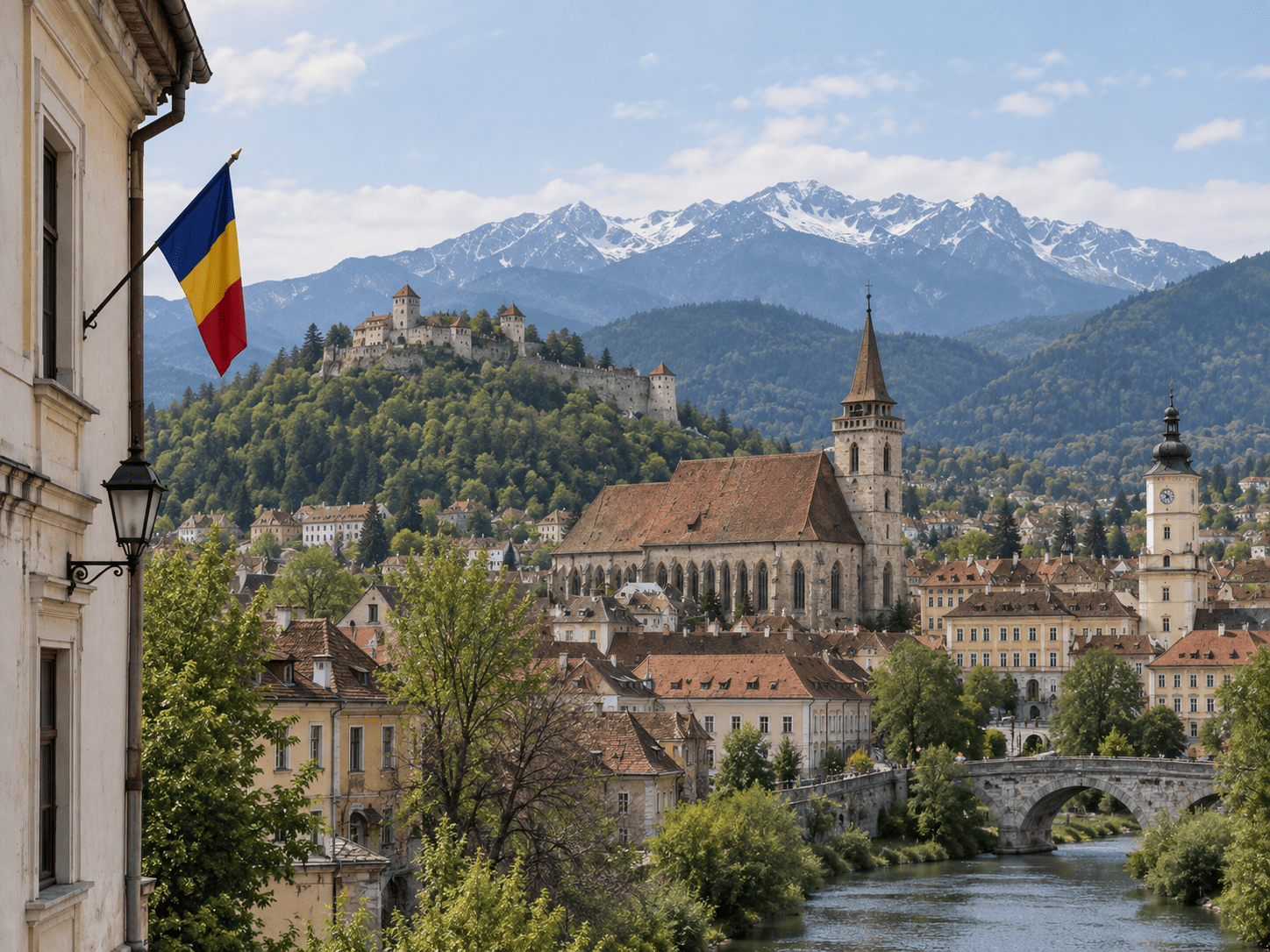
Romania is difficult to understand through Bucharest alone. Regional differences can be seen in architecture, cuisine, pace of life, local traditions and even the atmosphere of individual cities. Transylvania is associated with the historic centres of Cluj Napoca, Brașov and Sibiu. Western Romania includes Timișoara and other cities with a strong Central European architectural legacy. Iași remains one of the largest university and cultural centres in the east of the country. Constanța offers a very different environment because of its location on the Black Sea. Bucharest combines the functions of an administrative capital, a major university centre, an international business hub and the country’s most intensive urban environment.
Regional diversity becomes an important part of the adjustment process. An impression of Romania formed after several weeks in Bucharest will differ from the experience of studying in Cluj Napoca or Iași. According to Romania’s official education portal, Timișoara has tens of thousands of students and several universities, while the city’s cultural life includes theatre, music, galleries and numerous urban events.
Communication in Romania
Everyday communication in Romania is generally quite open. In a university environment, meeting people often happens more easily than expected after moving abroad. International groups, Erasmus communities, student events and university organisations create natural opportunities for interaction.
Polite forms of address matter more in formal situations. When speaking to an unfamiliar adult, Bună ziua, meaning good afternoon or hello, is a safe starting point. Bună dimineața is used in the morning and Bună seara in the evening. Mulțumesc means thank you, Vă rog is used for please or you are welcome, and Scuzați mă is useful for apologising or getting someone’s attention.
Using even a few Romanian words is usually received positively. Perfect grammar is not necessary for an initial conversation. A simple greeting and a word of thanks are often enough to show respect for the local environment.
Communication among younger people is considerably less formal. English is regularly used in student circles, especially in large university cities.
Is Romanian Necessary?
Managing the first few weeks with English alone is quite possible, especially in Bucharest, Cluj Napoca, Timișoara and Iași. Universities, cafés, delivery services, banking apps and many private services allow most basic tasks to be handled in English.
Over time, situations appear where Romanian becomes much more useful. Speaking with a landlord, visiting a public institution, shopping at a market, using a small local pharmacy, travelling to a smaller town or resolving a household issue may require at least a basic vocabulary.
Starting with everyday expressions is usually more useful than beginning with complex grammar.
Romanian belongs to the Romance language family and developed from Latin. Many words therefore resemble Italian, Spanish and French. Similarities are especially visible in everyday and university vocabulary. Even without knowing Romanian, parts of signs, menus and notices can often be understood through familiar roots.
Romanian also has distinctive features. The definite article is usually attached to the end of a noun. Student means student, while studentul refers to a specific student. By comparison, Italian uses il studente, Spanish el estudiante and French l’étudiant. Romanian vocabulary has also been influenced by Slavic languages, Greek, Turkish, Hungarian and German. As a result, spoken Romanian can sound both familiar and unusual. Regular exposure gradually makes more words recognisable in public transport, shops, universities and everyday conversations.
First Everyday Tasks
One of the most useful strategies after moving is to build a simple everyday routine. A familiar route to the university, the nearest supermarket, a pharmacy, a family doctor, a transport stop, a bank branch and a few regular places gradually turn an unfamiliar city into a more predictable environment.
Large cities have international and Romanian supermarket chains, small minimarkets, traditional markets and specialist food shops. Markets remain a visible part of urban culture, with vegetables, fruit, cheese, meat products, herbs, honey and seasonal produce commonly available.
Shopping at a market can also become a practical introduction to everyday life in Romania. English is less common in such places, but names of products, numbers and basic expressions are often learned quickly through repeated use.
Living costs vary considerably depending on the city and type of accommodation. A university residence can be significantly cheaper than private housing. According to data from the national ANS statistical platform dated 25 March 2025, a place in a University of Bucharest residence cost an average of 210 to 260 lei per month, while accommodation at the Polytechnic University of Timișoara cost around 220 to 225 lei. When planning a budget, private rental costs should also be assessed according to the neighbourhood, condition of the property and whether accommodation is shared with other students.
During the first weeks, relying only on average figures found online is rarely the best way to plan a budget. Realistic monthly spending becomes clearer after several grocery trips, transport payments, utility bills and the first weekends in the city.
Romanian Cuisine
Getting to know the country becomes much more interesting through local food. Romanian cuisine developed under the influence of the Balkans, Central Europe, the Ottoman Empire and strong regional traditions.
One of the best known dishes is mămăligă, a cornmeal dish that can be served with cheese, sour cream, meat or other accompaniments. Sarmale are cabbage or vine leaves filled with meat and rice. Ciorbă refers to a broad group of soups, often with a distinctive sour flavour. Mici are small grilled meat rolls. Cozonac is especially common during major holidays, while papanași are frequently served as a dessert in traditional restaurants.
Food culture is about more than individual dishes. Small bakeries, cafés, markets, family restaurants and outdoor terraces help reveal the rhythm of local life and often become familiar places for everyday interaction.
Coffee culture is particularly visible in larger cities, where specialty coffee has developed rapidly. Small independent cafés often serve beans from different countries, filter coffee, V60 and other alternative brewing methods. Such spaces have become part of everyday urban life. Students use cafés for studying, meeting friends and working on laptops. Bucharest has a particularly high concentration of cafés in central districts, while Cluj Napoca is known for a strong student atmosphere. For a newly arrived student, a local café can be one of the easiest ways to get to know the neighbourhood, hear Romanian in everyday use and become familiar with the city more quickly.
How Urban Transport Works
Transport systems vary from city to city. Buses, trams and trolleybuses operate in many major university centres, while Bucharest also has a metro system. Ride hailing services and other commercial transport apps are widely available in larger cities.
During the first days, checking the official app of the local transport operator and the rules for buying tickets is useful. Payment systems differ between cities, so experience from Bucharest cannot automatically be applied to Cluj Napoca or Timișoara.
Students may qualify for transport discounts, although eligibility depends on the type of transport, age, mode of study and current regulations.
University Life
The first days at university are often more important for adjustment than the first sightseeing trips around the city. A faculty becomes the main source of new contacts and provides an introduction to timetables, administrative procedures and academic requirements.
International students should identify the International Relations Office or an equivalent university department. Such offices help with organisational questions, university documents, mobility and adjustment. Communication with lecturers is best started in a formal manner. Emails should include a clear subject line, an appropriate greeting, a brief explanation of the question and a signature. Academic culture differs between faculties, so observing local conventions during the first weeks can help avoid uncomfortable situations.
Administrative independence is particularly important. Timetables, course registration, confirmation of student status, student ID cards and transport discounts may all be handled by different university departments. Keeping digital copies of key documents makes such procedures much easier to manage.
Building a New Social Circle
Social adjustment can be more difficult than practical adjustment. Moving abroad removes a familiar network of contacts, so even an attractive city may initially feel temporary or distant.
The university is usually the easiest place to start building a new social circle. International weeks, faculty events, student clubs, language exchanges and Erasmus communities make it possible to meet people without having to create a special reason for conversation.
Erasmus Student Network operates in Romania, with local sections at a number of universities helping international students through events, social activities and adjustment support. Some university websites also describe buddy programmes in which local students help international participants become familiar with the new environment.
Volunteering can provide another effective route into local life. Cultural projects, charitable initiatives, student associations and city events create contact around a shared activity, which can feel more natural than trying to meet people at random.
A social circle does not need to consist only of international students. International communities can make the first stage of relocation easier, while contact with Romanian students provides faster access to local culture, language and everyday habits.
Documents After Arrival
Different residence rules apply to citizens of the European Union and citizens of countries outside the EU. A single universal procedure therefore does not apply to every international student.
Students from outside the EU should check residence permit requirements in good time. Romania’s General Inspectorate for Immigration states that after entering the country for study purposes, an international student may need to obtain or extend the right of residence. Documents are submitted through the relevant territorial office, and an extension application should generally be filed at least 30 days before the current residence right expires. An official online platform is also available.
During the first days, creating a separate digital folder for a passport copy, rental agreement, university documents, health insurance, payment confirmations and immigration documents can simplify administration. Original documents should be stored separately.
Administrative requirements can change, so information from student chats is best treated only as an additional reference. Legal and immigration questions should be checked through the university and official government sources.
Healthcare and Emergencies
The procedure for accessing healthcare should be understood before a real problem occurs. A university may have its own medical office or provide information about available healthcare facilities.
Access to public healthcare depends on age and insurance status. Students are advised to register with a family doctor and clarify health insurance arrangements with the university in advance.
Romania’s single emergency number is 112. Police, ambulance and fire services can all be reached through this number.
Free Time and Discovering Romania
Adjustment often becomes easier when daily life expands beyond the apartment and the university. Romania is well suited to short trips that gradually reveal the differences between regions.
From Bucharest, trips to Brașov, Sinaia and other destinations in central Romania are relatively easy to organise. Students in Cluj Napoca have convenient access to Transylvania. Timișoara provides a starting point for exploring Banat and western Romania. Iași offers access to Moldavia and Bukovina, while Constanța opens the way to the Black Sea coast and Dobruja.
Travelling helps move beyond the idea of Romania as a country centred only on Bucharest. The medieval architecture of Transylvania, the Carpathian Mountains, rural Maramureș, the monasteries of Bukovina, the Danube Delta and the Black Sea form very different cultural landscapes. Museums, theatres and public cultural institutions may also offer student discounts.
In the next article, Bucharest, the capital of Romania, will be explored in detail, including the urban environment, neighbourhoods, transport, everyday life and places worth discovering after moving.